Most homeowners think pest problems start inside the house. In reality, they usually begin outside. Long before ants show up in the kitchen or rodents start scratching in the walls, the conditions around the yard are already inviting them in.
Landscaping plays a much bigger role in pest activity than people realize. The way plants are trimmed, how water drains, and even where mulch is placed can either protect your home or quietly turn your property into a pest magnet.
Why Pests Are Drawn to Certain Yards
Pests are always looking for three things: food, water, and shelter. A poorly maintained landscape can offer all three without homeowners noticing.
Overgrown shrubs create shaded, undisturbed areas where insects thrive. Piles of leaves, wood, or debris provide nesting spots for rodents. Moist soil and standing water become perfect breeding grounds for mosquitoes and other insects.
Once pests settle outside, it is only a matter of time before they move closer to the home.
Plants and Trees Too Close to the House
Shrubs and tree branches touching the structure act like bridges for pests. Ants, spiders, and rodents use them as direct pathways into walls, attics, and crawl spaces.
When vegetation grows too close, it also traps moisture against the exterior of the home. This creates ideal conditions for termites and other moisture-loving pests. Keeping plants trimmed back creates a buffer zone that makes it harder for pests to reach entry points.
This is one of the most common issues professionals see during exterior inspections.
Mulch and Moisture Problems Around the Foundation
Mulch is great for landscaping, but it can cause serious pest problems when placed too close to the foundation. Thick layers of mulch hold moisture and provide shelter for insects, termites, and rodents.
When mulch touches the home, pests can live undisturbed right against the structure. Over time, this increases the risk of infestations and structural damage.
Keeping mulch several inches away from the foundation allows the soil to dry properly and removes a major hiding spot for pests.
Standing Water Is a Bigger Issue Than You Think
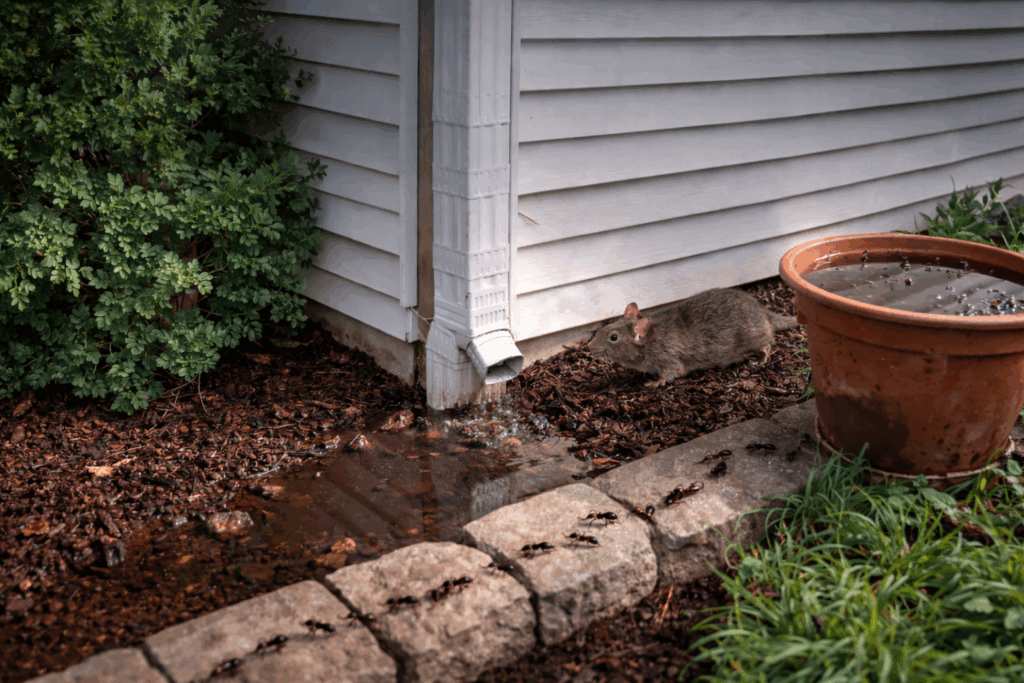
Standing water is one of the fastest ways to attract pests. Clogged gutters, overwatered lawns, leaking irrigation systems, and water-filled planters all create breeding grounds for mosquitoes and insects.
Rodents are also drawn to consistent water sources. Even small amounts of standing water can support pest populations long enough for them to establish nearby nests.
Fixing drainage issues and adjusting watering habits can significantly reduce pest pressure around the home.
Clean Yards Make a Real Difference
Cluttered yards give pests exactly what they want. Stacked firewood, unused planters, old furniture, and debris piles all provide shelter and nesting opportunities.
Keeping outdoor areas clean and organized removes hiding spots and makes the environment less appealing to pests. It also makes it easier to spot early signs of activity before problems get out of control.
Landscaping Alone Is Not Always Enough
Even well-maintained landscapes can still attract pests. Environmental conditions, nearby properties, and seasonal changes all play a role in pest movement.
This is where professional pest control becomes important. Landscaping reduces risk, but it does not eliminate it completely. Without treatment, pests can still find ways onto the property.
How Professional Pest Control Supports Smart Landscaping
Professional pest control works alongside good landscaping practices. Exterior treatments create a protective barrier around the home, targeting pests before they enter.
Technicians focus on common entry points, nesting areas, and moisture zones. Regular service allows them to adjust treatments based on seasonal activity and changes in the landscape.
This combination of prevention and protection is far more effective than reacting after pests have already moved inside.
A Smarter Way to Keep Pests Out Long Term
The goal is not just to remove pests. It is to make your property unattractive to them in the first place.
Simple landscaping adjustments reduce pest activity. Professional pest control strengthens that protection. Together, they create long-term results instead of short-term fixes.
For homeowners who want fewer infestations, less stress, and better protection, treating the outside of the home is where real pest control begins.
For additional guidance on reducing pest-friendly conditions around your home, you can reference this external resource from the Environmental Protection Agency on pest prevention and habitat control.