Palm trees are a defining feature of the Coachella Valley. They add curb appeal, shade, and a distinct desert character to homes across the region. But behind their beauty, palm trees can quietly create the perfect environment for pests if they are not properly maintained.
Many homeowners are surprised to learn that pest problems often start outdoors, long before insects or rodents are seen inside the house. In the Coachella Valley’s warm climate, palm trees can become a major contributor to ongoing pest activity.
Why Palm Trees Attract Pests in the Coachella Valley
Palm trees naturally collect debris. Dead fronds, seed pods, and organic material tend to build up beneath the canopy. In a hot desert environment, this debris provides shade, insulation, and protection from predators.
For pests, that combination is ideal.
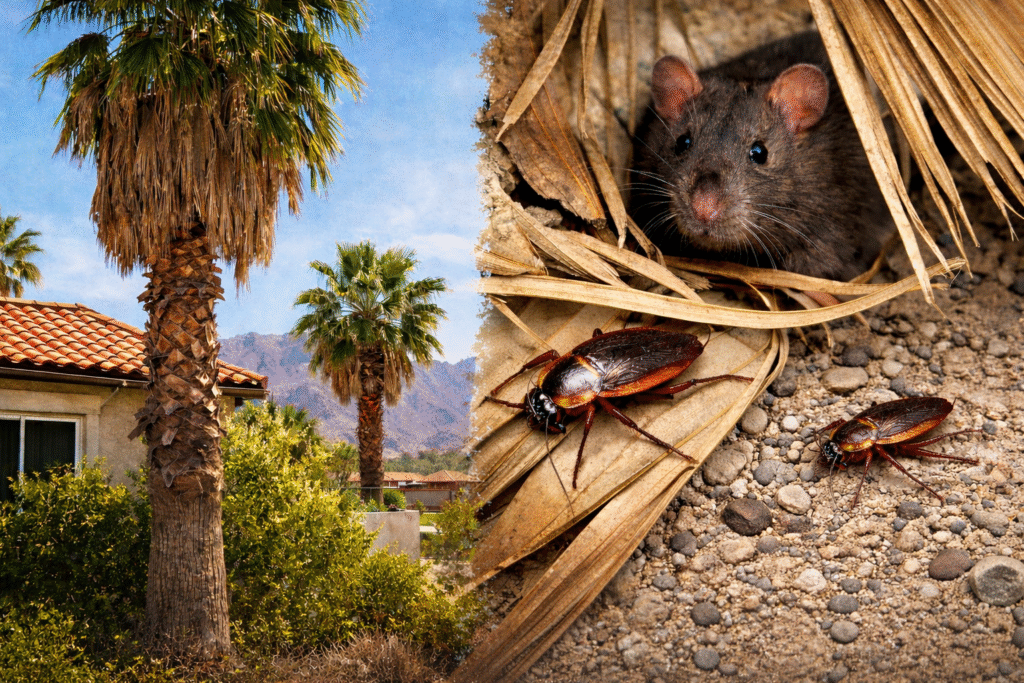
Rodents, ants, spiders, cockroaches, and even scorpions are commonly found living in or around palm trees. The thick layers of dead material create hidden nesting areas that are rarely disturbed, allowing pest populations to grow unnoticed.
Fallen Fronds Create Hidden Nesting Areas
One of the biggest issues with palm trees is fallen or untrimmed fronds. When fronds are left in place, they form dense, dark layers that rodents and insects rely on for shelter.
Rats and mice frequently nest inside dead palm material, especially when trees are located near roofs, fences, or walls. These structures give rodents easy access to higher areas of the home, including attics and rooflines.
Once rodents establish a nesting area in a palm tree, it becomes much easier for them to move indoors.
Irrigation and Moisture Increase Pest Activity
Although the Coachella Valley is known for its dry climate, palm trees often rely on irrigation systems to survive. Drip lines and sprinklers around the base of the tree create small pockets of moisture.
Even minimal moisture is enough to attract pests.
Ants, termites, and cockroaches are especially drawn to damp soil and shaded areas near palm trees. These pests do not need standing water to survive. Consistent moisture from irrigation is often all they need to establish activity close to the home.
Poorly adjusted irrigation systems can unintentionally turn palm trees into pest hotspots.
Palm Trees Can Act as Direct Pathways Into Your Home
Overgrown palm fronds that touch roofs, walls, or upper windows act as bridges for pests. Insects and rodents use these fronds to travel directly from the tree into the structure.
Once pests gain access to attics or upper levels, they become harder to detect and more expensive to remove. Damage to insulation, wiring, and stored items is common when infestations go unnoticed.
This is one of the most common issues seen by Coachella Valley pest control professionals during inspections.
Signs of Pest Activity Around Palm Trees
Pest problems around palm trees often go unnoticed until they spread. Homeowners should regularly inspect the area around their trees for warning signs.
Droppings, nesting material, ant trails, increased insect activity, or disturbed soil near the base of the tree can all indicate a pest issue. Activity near the roofline or attic vents may also suggest pests are using palm trees as access points.
Early detection makes a significant difference in controlling infestations.
Preventative Palm Tree Maintenance Makes a Difference
Proper palm tree maintenance is one of the most effective ways to reduce pest activity. Regular trimming removes dead fronds and eliminates nesting opportunities. Keeping the area beneath the tree clear of debris reduces shelter and hiding spaces.
Monitoring irrigation is equally important. Avoid overwatering and ensure drip systems are functioning properly to prevent excess moisture buildup.
These steps alone can significantly lower pest pressure around the home.
Why Professional Pest Control Is Still Important
While good landscaping practices help, they are not always enough. Pests can still find ways to settle in palm trees without obvious signs.
A local Coachella Valley pest control provider understands how desert conditions influence pest behavior. Professional inspections can identify hidden problem areas around palm trees that homeowners may miss.
Preventative treatments around landscaping and exterior structures help stop pests before they move inside. This proactive approach is especially important for homes with multiple palm trees or properties located near open desert areas.
Enjoy Your Palm Trees Without the Pest Problems
Palm trees should enhance your home, not create ongoing pest issues. With proper maintenance, early detection, and professional support, homeowners can enjoy their landscape without inviting unwanted guests.
Understanding how palm trees attract pests is the first step. Taking action early is what keeps small issues from becoming major infestations.