Every pest problem feels different when it is happening to you.
Ants in the kitchen. Spiders in the garage. Something scratching in the attic at two in the morning.
But here is what most homeowners never learn: nearly every pest problem gets solved the same way. There is a system behind effective pest control, and once you understand it, you stop chasing individual bugs and start fixing the conditions that invite them.
This guide walks you through that system. It is the same framework professionals use, and most of it costs you nothing but attention.
Why Pests Choose Your Home
Pests are not random. They are shopping.
Every pest that enters your home is looking for some combination of three things: food, water, and shelter. If your home provides all three, pests will find it. If it provides none, they move on to the neighbor’s.
In the Coachella Valley, there is a fourth factor. Extreme heat pushes pests indoors during summer, and mild winters mean pests stay active year-round instead of dying off like they do in colder climates. There is no true off-season here.
Understanding this changes how you think about pest control. You are not fighting bugs. You are managing what your home offers them.
Step 1: Identify What You Are Dealing With
Different pests require different responses, and misidentification wastes time.
Ant trails in the kitchen call for a completely different approach than a roach behind the refrigerator or a rodent in the attic. Before treating anything, figure out what you have.
Look at droppings, damage patterns, and where the activity is concentrated. Take a photo if you can. If you are seeing multiple signs and cannot pin down the source, our guide to the 8 warning signs you may need professional pest control can help you read what your home is telling you.
Step 2: Remove Food and Water Sources
This is the least glamorous step and the most powerful one.
In the kitchen, store food in sealed containers, wipe counters nightly, and do not leave dishes overnight. Sweep up crumbs, including under appliances where they accumulate for months.
Take trash out regularly and use bins with tight lids, inside and out.
Fix drips and leaks. A slow drip under a sink is a water fountain for ants, roaches, and rodents. In a desert climate, water is often the bigger draw than food.
Outside, pick up fallen fruit, do not leave pet food out, and eliminate standing water anywhere on the property. Even a saucer under a plant pot can breed mosquitoes.
Step 3: Deny Them Entry
Most pests walk, crawl, or squeeze their way in through openings you have never noticed.
Door sweeps on exterior doors. Screens on windows and vents, repaired if torn. Caulk around pipes, cables, and utility penetrations. Weatherstripping where garage doors meet the ground.
Rodents need a gap the size of a quarter. Roaches need almost nothing. Sealing your home is tedious work, but it is permanent work. Every gap you close is closed for good. Our breakdown of the common entry points pests use to get inside your home shows exactly where to look.
Step 4: Make Your Yard Work for You, Not Against You
Your landscaping is either a barrier or a bridge.
Trim branches and shrubs so nothing touches the house. Branches touching the roof are highways for ants, roaches, and rodents.
Keep mulch and ground cover pulled back from the foundation. Store firewood off the ground and away from the house. Rake up leaf litter and debris where pests hide and nest.
The choices you make outside have a direct effect on what shows up inside. We wrote a full guide on how landscaping choices can attract or prevent pests if you want to go deeper.
Step 5: Treat the Problem That Remains
Prevention shrinks the problem. Treatment finishes it.
For light pest pressure, targeted store-bought products can work. Gel baits for ants and roaches placed near activity. Traps for rodents placed along walls.
But be honest with yourself about results. If you are spraying the same ant trail every week, the spray is not working. Repellent sprays kill the pests you see while the colony behind the wall keeps producing more.
This approach of prevention first and targeted treatment second is called Integrated Pest Management, and it is the method backed by the EPA as the most effective long-term approach to pest control. It works because it attacks the cause, not the symptom.
For a fair look at where DIY ends and professional help begins, see our comparison of DIY pest control vs professional pest control.
Step 6: Stay Consistent
One-time efforts produce one-time results.
Pests reproduce quickly and pressure from outside never stops, especially in a climate with no winter die-off. The homes that stay pest-free are the ones where prevention is routine and treatment is scheduled, not reactive.
That is why professionals recommend regular service rather than emergency calls. If you are wondering what a reasonable schedule looks like, we broke down how often pest control should be done for different situations and seasons.
When to Bring in a Professional
Some situations are beyond the reach of any DIY approach, and knowing them saves you months of frustration:
- Termites, which cause structural damage silently and require specialized treatment
- Bed bugs, where DIY success rates are extremely low
- Established rodent infestations with activity in multiple areas
- German roach infestations, which outbreed almost any consumer product
- Stinging insects like bees and wasps in wall voids or high locations
- Any problem that keeps returning after repeated treatment
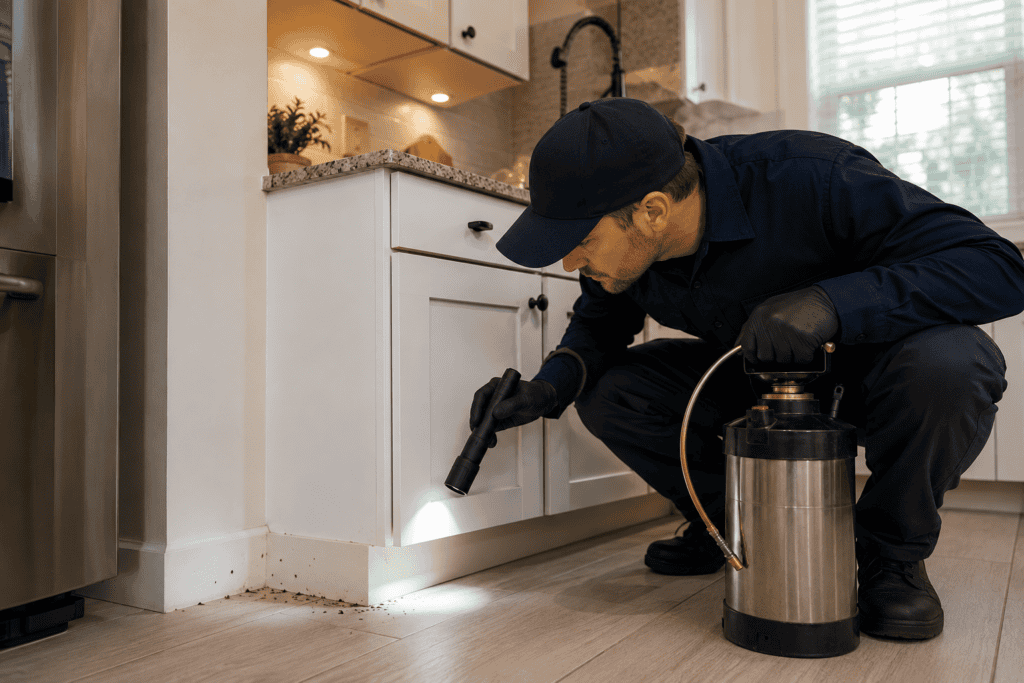
A licensed professional brings identification skills, commercial-grade products, and knowledge of where pests actually live inside a structure. If the problem has outgrown your efforts, a professional pest control service will end the cycle faster and usually cheaper than months of store-bought attempts.
FAQs
What is the most effective way to get rid of pests?
The combination of sanitation, exclusion, and targeted treatment, applied consistently. No single spray or device beats fixing the conditions that attract pests in the first place.
How can I get rid of pests naturally?
Sealing entry points, removing food and water, and managing your landscaping are all completely natural and are also the most effective steps. Natural repellents like essential oils have weak evidence and fade quickly.
Why do pests keep coming back after I spray?
Sprays kill the individuals you see, not the colony or nest producing them. If the source and the attractants remain, the pests return. This is the most common DIY frustration we hear.
When is pest season in the Coachella Valley?
There is no single season here. The desert climate keeps pests active all twelve months, with activity shifting indoors during extreme summer heat and cooler winter nights.
How much does professional pest control cost?
It varies by pest and property, but ongoing prevention plans cost far less than emergency treatments for established infestations. We broke down the real numbers in our guide to pest control costs in the Coachella Valley.
Can a clean house still get pests?
Absolutely. Cleanliness reduces attractants, but pests also come in for water, shelter, and warmth. Even spotless homes need sealed entry points and outdoor maintenance.
Take the First Step
Getting rid of pests is not about one heroic weekend of spraying. It is a system, and every step you take makes the next one more effective. If you want a professional set of eyes on your home to find what is attracting pests and where they are getting in, reach out to Rudy’s Termite & Pest Control for an inspection.