Termites do not knock. They do not warn you. By the time most Coachella Valley homeowners notice them, the colony has already been working inside the walls for months, sometimes years. And that quiet damage adds up fast. The average homeowner pays thousands in repairs that could have been avoided if the problem had been caught a few weeks earlier.
The good news is, termites leave clues. Once you know what to look for, you can spot the early signs yourself and call in help before the damage gets serious. Here is what every homeowner in Indio, La Quinta, Palm Desert, and the rest of the valley should be checking for.
Why the Coachella Valley Is a Termite Hot Spot
The desert climate here is not the termite-free environment people often assume it is. In fact, drywood termites thrive in this region. They do not need soil contact like subterranean termites do, which means they can live entirely inside the wood of your home, working from the inside out.
Add irrigation systems, landscaping, and the moisture that builds up around foundations and you also create perfect conditions for subterranean termites. The combination of both species in our area makes regular inspections more important here than in many other parts of California.
Mud Tubes Along the Foundation
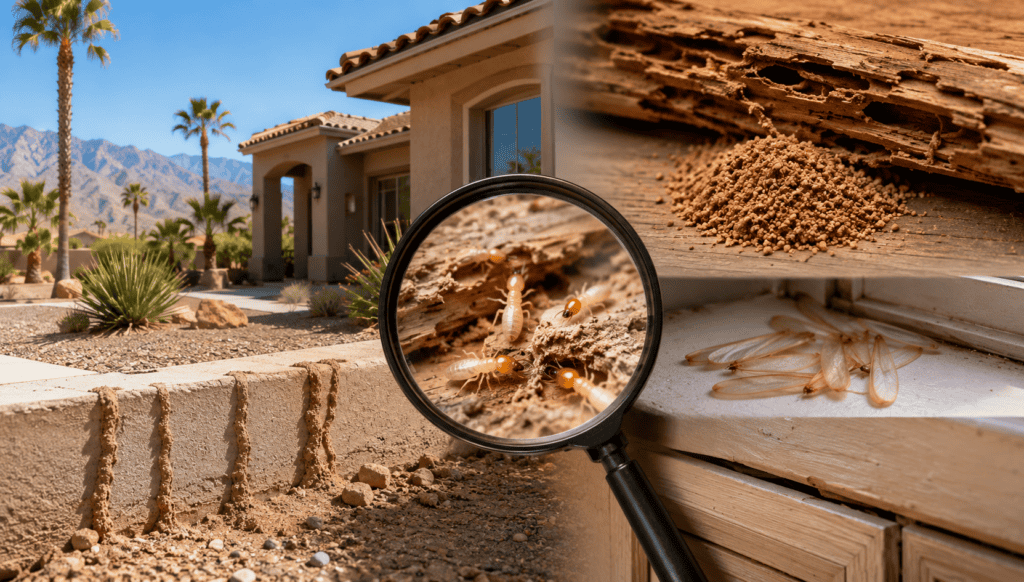
If you walk around the outside of your home and see thin, pencil-width tubes of dried mud running along the foundation, that is one of the clearest signs of subterranean termites. These tubes are how they travel between the soil and the wood of your home without drying out.
Check the perimeter of your house, the garage, any porches, and crawl spaces if you have them. The tubes are usually a sandy brown color and blend in easily, so look closely. Breaking one open is not a good idea, since it just tells the termites you found them. Leave it alone and call a professional.
Small Piles of What Looks Like Sawdust
Drywood termites push their droppings out of small holes in the wood they are eating. These droppings, called frass, look almost exactly like coarse sawdust or coffee grounds and tend to collect in small piles beneath the affected wood.
Common places to find frass include window sills, attic floors, baseboards, and inside cabinets. If you see a small mound of what looks like sawdust and you cannot remember sanding or cutting anything recently, it is worth investigating. That pile is a direct indicator of an active drywood termite colony nearby.
Hollow-Sounding Wood
Termites eat wood from the inside, so the outside surface often looks fine while the interior is honeycombed and weakened. The easiest way to check is to tap on wooden beams, door frames, baseboards, and structural posts with the handle of a screwdriver or just your knuckle.
Healthy wood gives a solid, dense sound. Termite-damaged wood sounds hollow, almost papery. Pay special attention to wood that stays warm or near moisture sources. If anything sounds off, get it inspected. Hollow wood means damage is already advanced.
Discarded Wings Near Windows and Doors
Once or twice a year, termites swarm. Reproductive members of the colony fly out to start new colonies, and after a short flight they shed their wings. You will often find small piles of identical, translucent wings on window sills, near doors, or close to outdoor lights.
Finding wings means there is already an established colony close to your home. The new termites may already be settling into a fresh part of your structure right now. This is one of the most urgent warning signs and should not be ignored.
Doors and Windows That Suddenly Stick
When termites tunnel through wood, they release moisture. That moisture causes the surrounding wood to swell and warp slightly. The result is doors and windows that suddenly do not close right, frames that look out of alignment, or trim that has begun to bow.
Homeowners often blame these issues on humidity or settling. Sometimes that is right. But if a door that always worked perfectly is now sticking and you have not changed anything else, termites should be on the list of suspects.
What to Do If You Spot Any of These Signs
Do not panic, but do not wait either. Termite damage gets worse, not better, with time. The longer the colony is active, the more expensive the repairs.
Call a licensed pest control company that handles termites specifically. A real inspection will identify what species you are dealing with, how widespread the activity is, and what treatment makes sense. In the Coachella Valley, where both drywood and subterranean termites are active year round, an annual inspection is one of the smartest investments a homeowner can make. It costs far less than a single repair bill from undetected damage.
Frequently Asked Questions
Are termites really active year round in the Coachella Valley?
Yes. Unlike colder climates where termites slow down in winter, the warm temperatures here keep them active throughout the year. Swarming activity peaks in spring, but the colonies inside walls and structures keep eating regardless of the season.
Can I treat termites myself with products from a hardware store?
Over-the-counter products rarely work on real termite infestations. They might kill the few termites they directly contact, but the colony itself stays intact and keeps doing damage. Effective termite treatment requires professional-grade products and the knowledge to apply them where the colony actually lives.
How much does a termite inspection in the Coachella Valley typically cost?
Many companies offer free or low-cost inspections, especially if you are a new customer. Even paid inspections are usually a fraction of what a single repair would cost. Compared to the price of replacing damaged structural wood, an annual inspection is one of the most cost-effective things a homeowner can do.
How long does termite treatment take?
It depends on the type of termite and the extent of the activity. Spot treatments for small drywood infestations can be done in a single visit. Whole-structure treatments, like tent fumigation, usually take two to three days. A professional will walk you through what your specific situation requires.
Will my homeowners insurance cover termite damage?
Usually not. Most homeowners policies treat termite damage as a maintenance issue, not a sudden covered event. This is why prevention and early detection matter so much. Catching the problem early is almost always something you pay for out of pocket either way, so paying a little to prevent it beats paying a lot to fix it.