
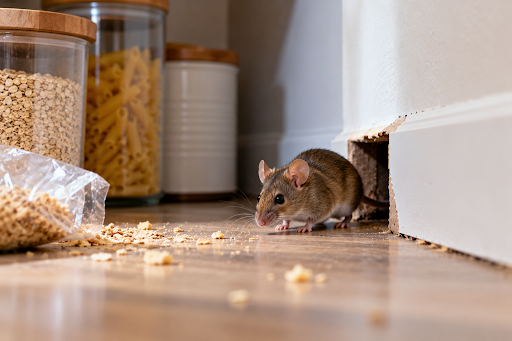
In the Coachella Valley, fall is the season everyone waits for. The heat finally breaks, nights cool off and people start opening windows again. Mice notice the change too. As nights get cooler and outdoor food sources shift, mice start looking for warm, protected places with easy food, and homes, garages and storage sheds fit the bill perfectly.
If you have started hearing scratching in the walls at night or finding droppings in the pantry, you are not alone. Here is why mice come inside this time of year, how they get in and what actually works to get them out.
Why Mice Move Indoors in the Fall
Mice do not hibernate. They stay active all year and breed quickly, with a single female able to produce several litters a year. As temperatures drop at night, homes offer steady warmth, shelter from predators and a reliable supply of crumbs, pet food and stored goods.
Homes near open desert, golf courses, orchards and date groves often see more rodent activity, since those areas support large populations that spread toward buildings. New construction nearby can also push mice out of fields and into existing neighborhoods.
How Mice Get Into Your Home
The biggest surprise for most homeowners is how small an opening a mouse needs. According to the University of California’s house mouse pest note, mice can squeeze through openings slightly larger than a quarter inch, roughly the width of a pencil. If the head fits, the body follows.
Common entry points in Coachella Valley homes include:
- Gaps under garage doors, especially worn or damaged seals
- Openings where AC refrigerant lines, plumbing and cables enter the house
- Gaps along the bottom edge of stucco walls
- Unscreened or damaged attic and foundation vents
- Dryer vents without proper covers
- Spaces around pool equipment and utility boxes near the house
Mice also travel in through items brought inside from garages and sheds, such as boxes and holiday decorations.
Signs You Have Mice
Look for these signs, especially in kitchens, pantries, garages, attics and under sinks:
- Small dark droppings about the size of a grain of rice
- Chewed food packaging, paper or insulation
- Gnaw marks on wood, plastic or wiring
- Shredded paper or fabric nests in hidden spots
- Scratching or scurrying sounds at night
- A musty, stale odor in enclosed areas
Seeing one mouse during the day often means there are more you are not seeing, since mice are mostly active at night.
How to Get Rid of Mice
Step 1: Remove Food and Water
Store pantry food in sealed glass or hard plastic containers. Do not leave pet food out overnight. Clean up fallen fruit from citrus trees and keep bird seed off the ground near the house. Fix dripping outdoor faucets and irrigation leaks.
Step 2: Trap the Mice Inside
Snap traps placed along walls, behind appliances and in corners where you see droppings are one of the most reliable methods. Set several traps rather than one, since mice rarely travel far from their nest. Check traps daily and wear gloves when handling them.
Using poison bait inside the home can lead to mice dying in walls, which causes odors and attracts flies. California also restricts many rodenticides, so it is best to talk to a licensed professional before using any bait.
Step 3: Seal the Entry Points
Trapping without sealing means more mice will move in. Fill small gaps with copper or steel mesh and sealant, cover vents with sturdy screening, install door sweeps and replace worn garage door seals. Larger gaps may need metal flashing or hardware cloth. Expanding foam on its own is not enough, since mice chew right through it.
This exclusion work is very similar to what we recommend for rats, and our guide on rats in the attic and how to seal them out shows what proper sealing looks like.
Mouse Control Myths That Waste Time
Cats solve the problem. A cat may catch a few mice, but it will not stop new ones from coming in through gaps, and mice often stay in walls and attics where cats cannot reach.
Peppermint oil and dryer sheets keep mice away. Strong smells may bother mice for a short time, but they do not stop a hungry mouse from reaching food and shelter.
Ultrasonic plug-in devices work. Research and field experience show little lasting effect. Mice quickly get used to the sound or simply avoid the area the device covers.
One mouse is not a big deal. Mice breed quickly, and where you see one, there are often several more. Acting early keeps a small problem from turning into an infestation that damages insulation, wiring and stored items.
Cleaning Up Safely
Mouse droppings and urine can carry germs, and in some cases rodents spread hantavirus. Do not sweep or vacuum droppings, since that can stir particles into the air. The CDC’s hantavirus guidance recommends airing out the space, wearing gloves, spraying droppings and nesting material with a disinfectant or bleach solution, letting it soak, then wiping it up with paper towels and disposing of it in a sealed bag.
When to Call a Professional
If you keep catching mice, see droppings in several rooms, hear activity in walls or the attic, or cannot find where they are getting in, it is time to call for help. A trained technician can find entry points you would miss, set up a safe trapping plan and seal the home properly.
Rudy’s Pest Control offers mouse control and exterminator services across Indio, La Quinta, Palm Desert, Palm Springs and the rest of the Coachella Valley.
Frequently Asked Questions
Why do I suddenly have mice in my house?
Cooler fall nights, changes in outdoor food sources and nearby construction can all push mice indoors. They are looking for warmth, shelter and food, and even a small gap lets them in.
How small of a hole can a mouse fit through?
Mice can squeeze through openings slightly larger than a quarter inch. Any gap you can fit a pencil into is big enough.
What is the fastest way to get rid of mice?
Remove food sources, set several snap traps along walls where you see activity, and seal entry points at the same time. Trapping without sealing usually leads to more mice.
Do mice leave on their own?
Rarely. As long as there is food, water and shelter, mice will stay and breed. Without action, a small problem can grow quickly.
Is it dangerous to clean up mouse droppings?
It can be if done carelessly. Do not sweep or vacuum. Wear gloves, soak droppings with disinfectant, wipe them up with paper towels and seal them in a bag.