Finding termite droppings on a windowsill or a wood-damaging report in escrow paperwork usually leads to one big question: how much is this going to cost? Tenting a house sounds expensive and disruptive, and many homeowners in Indio, La Quinta, Palm Desert and Palm Springs want to know what they are getting into before they schedule anything.
This guide covers what termite fumigation typically costs in the Coachella Valley, what pushes the price up or down, how the process works and when a less invasive treatment might be enough.
Which Termites Need Fumigation?
Southern California has two main types of termites, and they are treated differently.
Drywood termites live inside the wood they eat. They do not need contact with soil, so they can infest attic framing, eaves, window frames and furniture anywhere in the house. Their colonies can be spread throughout a structure and hidden inside the wood, which is why whole-structure fumigation is often recommended when an infestation is widespread. The University of California’s drywood termite pest note explains why these termites are hard to detect and treat without professional help.
Subterranean termites live in the soil and travel into structures through mud tubes. They are usually treated with soil treatments or bait systems rather than tenting.
If you are not sure which type you have, an inspection is the first step. Our post on termite inspections before selling in California explains what a licensed inspector looks for.
Typical Termite Fumigation Costs
Fumigation pricing is based mostly on the size of the structure in cubic feet, not just square feet. A two-story home or a home with high, vaulted ceilings holds more volume and needs more fumigant than a single-story home of the same floor area.
As a general guide, many Southern California homeowners see fumigation quotes roughly in the $1,500 to $4,000 range for a typical single-family home. Larger homes, homes with complex rooflines and multi-unit buildings can cost more. These ranges are only a starting point, and a written quote after inspection is the only reliable number.
What Affects the Price
Size and Volume of the Home
More cubic footage means more fumigant and more tarp material, which raises the cost.
Roof Type
Tile roofs are common across the desert, and they can add to the cost. Tarps must be laid carefully to avoid breaking tiles, and some jobs need extra protection or sealing. Ask whether your quote includes any roof tile protection or repair.
Access and Surroundings
Homes close to walls, fences, pools or neighboring structures, or with heavy landscaping against the house, take more time to tarp and seal.
Extra Services
Some quotes include gas shut-off and restoration, bags for food and medicine, and wood repairs. Others list them separately. Compare what is included before comparing prices.
How the Fumigation Process Works
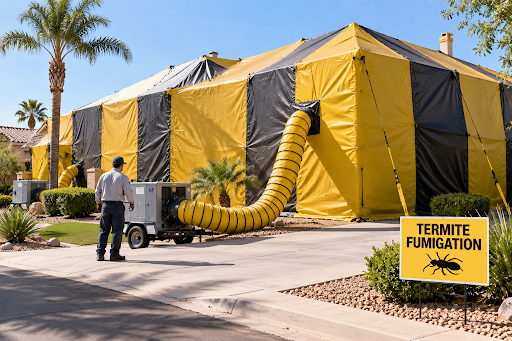
On fumigation day, the crew covers the house with tarps, seals the edges and releases a gas fumigant that penetrates the wood and kills termites throughout the structure. The house is secured and monitored while the gas does its work. Afterward, the tarps come off and the home is aerated until testing confirms it is safe to return.
Most homeowners are out of the house for about two to three days. Before the treatment you will need to:
- Remove people, pets and indoor plants
- Remove or double-bag food, medicine and anything you consume in special bags provided by the company
- Open interior doors, cabinets and drawers so the gas can circulate
- Arrange for the gas service to be shut off and restored
- Water plants near the house so the soil is moist
Fumigation kills termites inside the structure at the time of treatment, but it does not leave lasting protection. New termites can still swarm in later, which is why follow-up inspections matter.
When a Local Treatment May Be Enough
If drywood termites are limited to a small, accessible area, a localized treatment may be an option. Methods include injecting termiticide directly into infested wood, heat treatment or replacing damaged boards. Local treatments cost less and do not require leaving your home, but they only work if the infestation is small and every affected board can be reached.
A good inspector will explain which approach fits your home and why, rather than defaulting to the most expensive option.
Termites and Selling Your Home
Termite findings come up often during home sales in California. A licensed inspector produces a wood-destroying organism report that typically separates active infestations and damage from conditions that could lead to future problems. Buyers, sellers and lenders use that report to negotiate who pays for treatment and repairs.
If you are planning to sell, getting an inspection before you list gives you time to compare treatment options and avoid last-minute decisions during escrow. It also gives you a written record to share with buyers, which can make negotiations smoother.
How to Compare Fumigation Quotes
When you get more than one quote, make sure each covers the same things: the treatment method, gas shut-off and restoration, roof tile protection, bags for food and medicine, any wood repairs and the length of the warranty. A lower price that leaves out roof protection or repairs can end up costing more.
Check That Your Company Is Licensed
In California, termite inspections and treatments must be performed by companies licensed through the Structural Pest Control Board, which also lets consumers verify licenses and look up inspection reports. Ask for a written report and a written quote that spells out what is included.
Get a Termite Inspection
Rudy’s Pest Control provides termite inspections and treatment across the Coachella Valley, from Palm Springs to Coachella and Thermal. We will tell you what type of termites you have, how widespread they are and which treatment makes the most sense for your home and budget.
Frequently Asked Questions
How much does it cost to tent a house for termites in California?
Many single-family homes in Southern California fall roughly between $1,500 and $4,000, with larger or complex homes costing more. The price depends mainly on the home’s cubic footage, roof type and access.
How long do I have to stay out of my house for termite fumigation?
Usually about two to three days. The home is tarped, treated, aerated and tested before you are allowed back inside.
Is termite fumigation worth it?
For widespread drywood termite infestations, fumigation is often the most reliable way to reach colonies hidden throughout the structure. For small, accessible infestations, local treatments may be enough.
Can termites come back after fumigation?
Yes. Fumigation kills termites present at the time but does not prevent new ones from swarming in later. Regular inspections help catch new activity early.
What are the signs of drywood termites?
Small pellet-shaped droppings that look like sand or coffee grounds, tiny holes in wood, discarded wings near windows and wood that sounds hollow when tapped.