
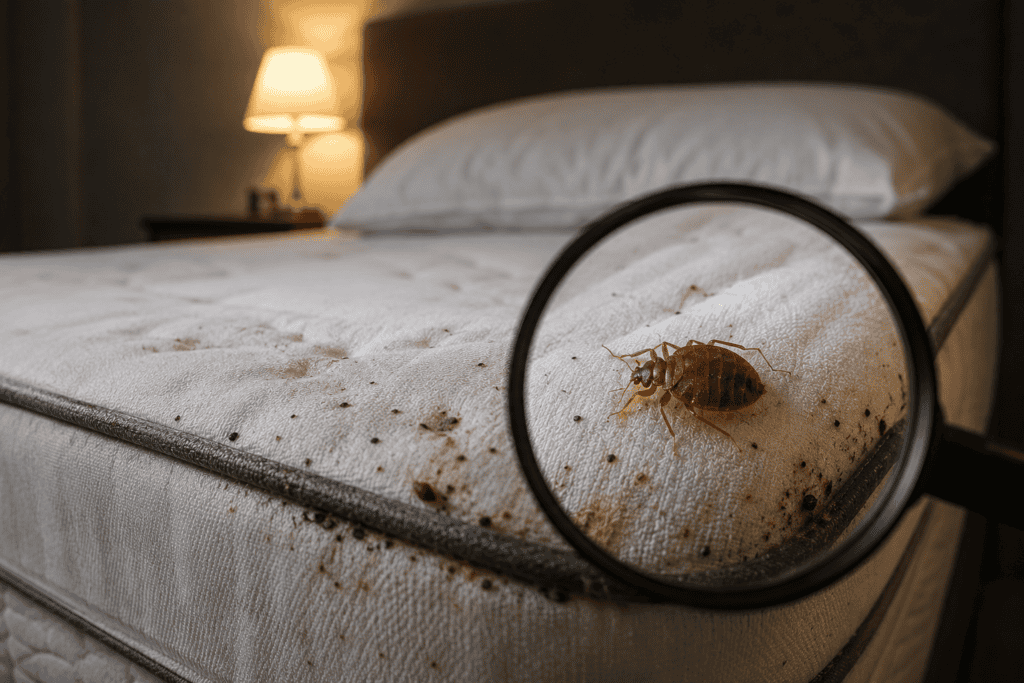
Bed bugs are one of the few pests that can make you dread your own bed.
They do not spread disease the way rodents or mosquitoes can. But they bite while you sleep, they multiply fast, and they are famously difficult to eliminate once they settle in.
The good news is that getting rid of bed bugs is absolutely possible. It just requires a process, not a single product.
Most failed bed bug treatments fail for the same reason. Homeowners kill the bugs they can see and miss the ones they cannot. This guide walks you through the full process, step by step, so nothing gets missed.
Step 1: Confirm You Actually Have Bed Bugs
Before you treat anything, make sure bed bugs are really the problem.
Fleas, carpet beetles, and even mosquito bites are regularly mistaken for bed bug activity. Treating the wrong pest wastes time and lets the real problem grow.
Look for these signs:
- Small rust-colored or black stains on sheets and mattress seams
- Tiny pale-yellow shed skins near the bed
- Live bugs about the size of an apple seed, flat and reddish brown
- A sweet, musty odor in heavy infestations
- Bites that appear in lines or clusters, often on arms, neck, and shoulders
Bites alone are not enough to confirm an infestation. People react to bed bug bites very differently, and some people do not react at all. Always look for physical evidence.
Step 2: Find Every Hiding Spot
This is the step that decides whether your treatment works.
Bed bugs are experts at staying hidden. They squeeze into cracks the width of a credit card and can live for months without feeding. If you only treat the mattress, you will keep getting bitten.
Check the mattress seams, box spring, and bed frame first. Then move outward. Nightstands, baseboards, electrical outlets, picture frames, curtain folds, and even books near the bed are all fair game. We have covered some unusual bed bug hiding spots that surprise most homeowners.
There is a reason bed bugs are so hard to detect. They feed at night, hide during the day, and an early infestation might only involve a handful of bugs. Take your time with the inspection.
Step 3: Contain the Infestation
Once you confirm bed bugs, your first job is to stop them from spreading.
Do not start moving furniture or bedding to other rooms. That is how one infested bedroom becomes an infested house.
Strip the bedding and seal it in plastic bags before carrying it to the laundry. Wash everything in hot water and dry on the highest heat setting for at least 30 minutes. Heat is one of the few things bed bugs cannot survive.
Seal items that cannot be washed in plastic bags or bins. Vacuum the mattress, bed frame, and surrounding floor thoroughly, then empty the vacuum contents into a sealed bag and dispose of it outside immediately.
Encasing your mattress and box spring in certified bed bug encasements traps any remaining bugs inside, where they eventually die.
Step 4: Choose Your Treatment Method
This is where most DIY efforts fall apart, so it helps to understand your options honestly.
Heat treatment. Professional heat treatment raises the temperature of a room to a level that kills bed bugs and their eggs in a single session. It is the most effective option available and does not rely on chemicals. Bed bugs die within about 20 minutes at 118 degrees Fahrenheit, and their eggs are eliminated at sustained higher temperatures.
Insecticide treatment. Professional-grade applications target the cracks and crevices where bed bugs actually live. This usually requires multiple visits, because eggs that survive the first treatment hatch within one to two weeks.
DIY sprays and foggers. The Environmental Protection Agency warns that foggers and bug bombs are largely ineffective against bed bugs. The mist does not reach the deep cracks where bed bugs hide, and it can actually scatter them into new areas of your home, making the infestation worse.
Research from the University of California’s Integrated Pest Management program confirms that bed bug populations have developed strong resistance to many over-the-counter pyrethroid sprays. This is why the bugs sometimes seem to shrug off store-bought products.
Step 5: Treat, Then Monitor
Whatever method you use, one round is rarely the end.
Bed bug eggs are cemented in place and resistant to most treatments. A follow-up inspection two weeks after treatment is essential to catch any newly hatched bugs before they mature and lay eggs of their own.
Install bed bug interceptors under the legs of your bed. These small cups trap bugs trying to climb up and give you a clear picture of whether any survivors remain.
Keep the mattress encasements on for at least a year. It sounds extreme, but bed bugs can survive many months without a meal.
Step 6: Prevent the Next Infestation
Bed bugs do not appear out of nowhere. They hitchhike.
Travel is the most common way they enter a home, which is why it pays to check your hotel room before unpacking on every trip. When you get back, there are a few simple steps to prevent bed bugs after returning home that take less than 20 minutes.
Be careful with secondhand furniture, especially mattresses, couches, and upholstered chairs. Inspect anything used before it comes through your door.
When to Call a Professional
Here is the honest answer: if you have found more than a few bed bugs, or if bites continue after your own treatment attempts, it is time to bring in a professional.
Bed bugs are one of the pests where DIY has the lowest success rate. Every week an infestation continues, the bugs spread further into walls, furniture, and neighboring rooms. What could have been a single-room treatment becomes a whole-home project.
A licensed bed bug exterminator can confirm the extent of the infestation, treat the areas you cannot reach, and verify the bugs are actually gone rather than just hiding.
FAQs
How long does it take to get rid of bed bugs?
With professional treatment, most infestations are resolved in one to three visits over two to four weeks. DIY attempts often stretch on for months because eggs and hidden bugs keep restarting the cycle.
Can bed bugs go away on their own?
No. Bed bugs can live for months without feeding, and a single female lays hundreds of eggs in her lifetime. An untreated infestation only grows.
Do I need to throw away my mattress?
Usually not. A quality bed bug encasement traps any bugs inside the mattress, where they die over time. Throwing out an infested mattress without treating the room often spreads bugs through the house on the way out.
What kills bed bugs instantly?
Direct heat above 118 degrees Fahrenheit kills bed bugs quickly, which is why professional heat treatments and high-heat dryer cycles are so effective. Contact sprays kill individual bugs but do nothing for the hidden population.
Why do I still see bed bugs after treatment?
Eggs that survived the first treatment hatch within one to two weeks. This is normal and why follow-up treatments and monitoring are built into any professional bed bug program.
Are bed bugs a sign of a dirty home?
No. Bed bugs are attracted to people, not dirt. They show up in five-star hotels and spotless homes alike. Clutter gives them more places to hide, but cleanliness does not prevent them.
Sleep Easy Again
Bed bugs are stressful, but they are beatable with the right process. If you are seeing the signs and want a proper inspection, contact Rudy’s Termite & Pest Control and we will help you figure out exactly what you are dealing with and the fastest way to end it.